Beyond the Label: Why Your Style 'Type' May Be Holding You Back

There is a certain comfort in categorization. The moment you declare yourself a minimalist, a maximalist, a classic dresser, or a quiet luxury devotee, the infinite, occasionally paralyzing world of fashion suddenly narrows into something navigable. Algorithms reward you for it. Pinterest boards organize themselves around it. And for a season — perhaps two — the clarity feels like liberation.
But clarity, unchallenged, has a way of calcifying into constraint.
The style-type framework has become one of contemporary fashion's most enduring pieces of received wisdom. Identify your aesthetic. Build around it. Refine relentlessly. It sounds like sophistication. In practice, it often functions as something far less flattering: a creative ceiling dressed up as self-knowledge.
The Seduction of the Category
The appeal of style typology is entirely understandable. Fashion is, at its most overwhelming, a daily negotiation between who you are, who you aspire to be, and what the social moment demands. A defined aesthetic offers a shortcut through that negotiation — a pre-approved answer to the question of who you are before the morning has even begun.
Style quizzes, influencer archetypes, and the language of personal branding have all accelerated this tendency. The woman who once simply loved clothes now curates a coherent visual identity. The wardrobe becomes a mood board. The mood board becomes a mandate.
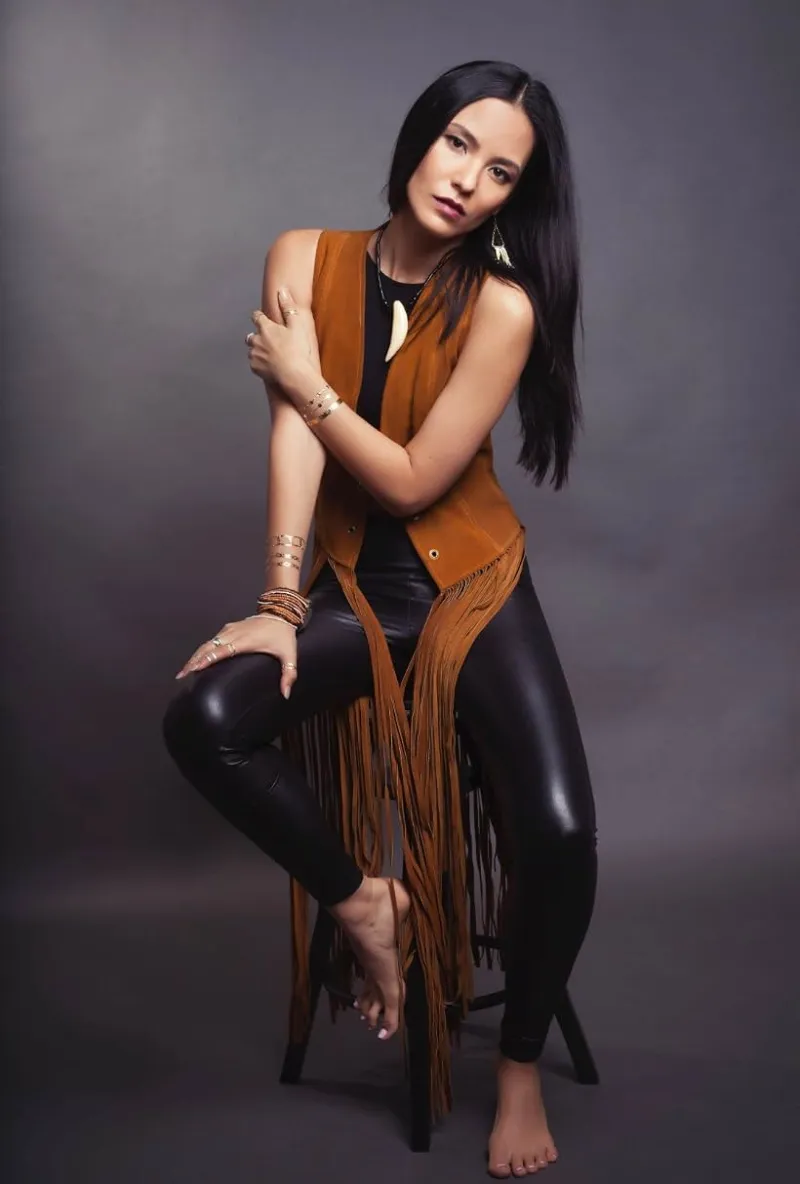
And here is where the trouble begins. Because the most compelling dressers — the women who genuinely command a room, who appear effortlessly composed without looking prescribed — are almost never reducible to a single aesthetic category. They contain multitudes. They contradict themselves, deliberately and beautifully.
When Self-Knowledge Becomes Self-Limitation
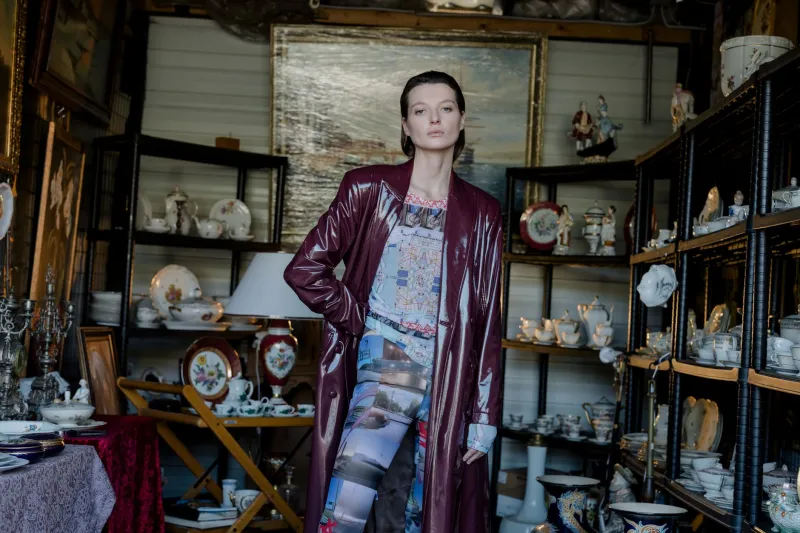
Consider the woman who has identified, with great conviction, as a minimalist. She gravitates toward neutral palettes, clean lines, and the studied restraint of a well-edited wardrobe. These instincts may be entirely genuine. But when a richly textured vintage coat catches her eye — something baroque, something excessive, something undeniably hers — she dismisses it. It doesn't fit the category. The label, in that moment, overrules the instinct.
Or consider the maximalist who has built her entire identity around color, print, and layered excess. She has, in effect, traded one kind of rigidity for another. The only difference is that her prison has louder wallpaper.
Style typology, at its most reductive, substitutes a map for the territory. It mistakes the description of a tendency for a complete theory of self. And it does something particularly insidious to the question of growth: it frames evolution as inconsistency, experimentation as confusion, and contradiction as a failure of identity.
The Principles Beneath the Labels
The antidote is not to abandon self-knowledge — it is to deepen it. Rather than asking what type am I?, the more productive question is what principles animate the choices I'm already making?
The minimalist who loves that baroque coat may, on reflection, discover that what she truly values is intentionality — the sense that every element of an outfit has earned its place. A maximalist piece chosen with that level of deliberateness is entirely consistent with that principle. The label was never the point; the underlying value was.
Similarly, the woman drawn to classic silhouettes may find that what she is actually responding to is longevity — the reassurance that a garment will not feel foolish in three years. That same instinct can lead her toward a bold, contemporary piece if it is constructed with genuine quality and a design sensibility that transcends the trend cycle.
When you operate at the level of principles rather than labels, contradiction becomes nuance. Evolution becomes coherence. The wardrobe stops being a collection of items that fit a category and starts being a genuine expression of a complex, developing person.
The Case for Productive Contradiction
Some of the most quietly influential dressers in American cultural life have built their authority precisely on their refusal to be categorized. They pair the expected with the unexpected. They move between registers — formal and casual, restrained and expressive — with a fluency that signals genuine taste rather than studied adherence to a code.
This fluency is not accidental. It is the product of deep engagement with the underlying grammar of dress: proportion, texture, color relationship, context, occasion. These are the tools of the sophisticated dresser. Style types, at best, are a beginner's guide to those tools. At worst, they are a substitute for ever learning to use them properly.
There is also something worth noting about the cultural moment in which we are dressing. The contemporary American wardrobe operates across an unprecedented range of contexts — remote work and in-person meetings, casual social occasions and formal professional ones, the highly documented and the entirely private. A single aesthetic category is structurally insufficient for that range of demands. Flexibility is not a style failure; it is a style requirement.
Moving Beyond the Map
None of this is an argument for chaos. A coherent wardrobe — one in which pieces relate to one another, in which the whole is greater than the sum of its parts — remains the foundation of sophisticated dressing. The goal is not to abandon all organizing principles but to hold them lightly enough that they serve you rather than the reverse.
Begin by interrogating the labels you have assigned yourself. Ask not does this fit my aesthetic? but does this serve the principles I actually care about? Ask whether the category you have adopted reflects genuine preference or accumulated habit. Ask, honestly, whether you have ever dismissed something you loved because it didn't fit the story you've been telling about yourself.
The most elegant truth about personal style is that it is personal — irreducibly, sometimes inconveniently so. It resists the clean edges of category. It evolves in response to life, to age, to experience, to desire. The woman who dresses with true sophistication is not the one who has identified her type and adhered to it faithfully. She is the one who has learned to trust her own eye — and has had the confidence to stop asking the label for permission.