The New American Elegance: Why Quiet Luxury Is Winning the Culture War Against Fast Fashion

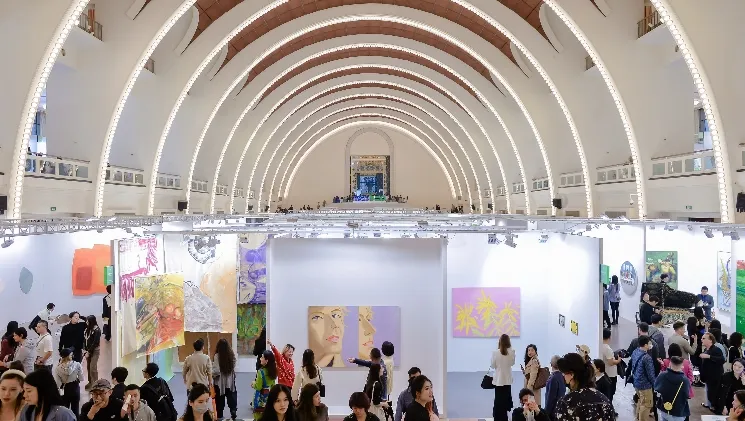
Photo: Jacquitoz, CC BY-SA 4.0, via Wikimedia Commons
For the better part of two decades, American fashion culture operated on a single, dominant frequency: more. More newness, more color, more trend cycles compressed into smaller and smaller windows. The rise of ultra-fast fashion platforms accelerated this tempo to an almost absurd degree, offering consumers thousands of new styles per week at price points designed to feel consequence-free. Buying became frictionless. Discarding became routine.
And then, almost imperceptibly at first, the frequency began to shift.
Somewhere between a global pandemic that stripped life down to its essentials and a generation of consumers who grew up watching the environmental and human cost of disposable fashion documented in real time, a counter-movement took hold. It did not announce itself loudly. That, in many ways, is the point.
Defining the Quiet Revolution
The phrase "quiet luxury" entered mainstream fashion discourse with considerable momentum in recent years, propelled partly by cultural touchstones — the understated costuming of prestige television dramas, the visible wardrobes of old-money aesthetics circulating on social platforms — but its roots run considerably deeper than a trending hashtag.
At its philosophical core, quiet luxury represents a rejection of conspicuous consumption in favor of something more nuanced: the idea that true sophistication requires no announcement. It is expressed through impeccable tailoring rather than prominent logos, through the weight and drape of quality fabric rather than the novelty of a seasonal print, through longevity rather than immediacy. In the American context, it draws on a lineage of restrained elegance — think the clean lines of American sportswear pioneers, the enduring relevance of a perfectly proportioned trench coat, the quiet authority of a cashmere turtleneck.
This is not, it should be noted, purely an aesthetic preference. It is an ideological one.
The Consumer Driving the Shift
The conventional wisdom once held that younger American consumers were the primary engine of fast fashion's growth — and for a period, the data supported that assumption. But the same demographic cohorts that fueled the rise of trend-chasing platforms are now, in meaningful numbers, driving their decline.
Millennials, now in their late twenties through early forties and occupying positions of significant purchasing power, have largely moved through a phase of aspirational trend consumption and arrived at something more considered. The experience of accumulating vast quantities of clothing that felt exciting for a season and disposable shortly thereafter has, for many, produced a form of aesthetic exhaustion. The response has been a turn toward investment — toward pieces that will still feel relevant and well-made in five years, toward brands that can articulate a genuine commitment to craft and ethics.
Gen Z's relationship with quiet luxury is simultaneously more complex and more ideologically charged. This generation entered adulthood with an acute awareness of the fashion industry's environmental footprint — a sector responsible for an estimated 10 percent of annual global carbon emissions. For a meaningful portion of Gen Z consumers, choosing quality over quantity is not merely a style preference but an ethical position. The deliberate, anti-trend sensibility of quiet luxury aligns naturally with a broader rejection of overconsumption as a cultural value.
Critically, this does not mean Gen Z has abandoned self-expression through clothing. Rather, the mode of expression has evolved. Individuality is increasingly communicated through curation and restraint — through the unexpected vintage find worn with precision, through the investment piece that signals knowledge rather than trend awareness.
What Panache Means When Everything Is Loud
The concept of panache — that ineffable quality of stylish self-assurance — has always existed in tension with trend culture. Trends, by definition, are collective. Panache is inherently individual. It cannot be purchased in bulk or replicated wholesale from an influencer's feed. It emerges from genuine self-knowledge, from understanding what works for your particular body, life, and sensibility, and from the confidence to dress accordingly regardless of what the algorithm is currently promoting.
In an era defined by digital noise and the relentless churn of content, that kind of self-possession has become genuinely rare — and therefore genuinely powerful. The person who arrives at a meeting, an event, or simply a Tuesday afternoon in a beautifully fitted, impeccably chosen outfit that bears no obvious relationship to current trends is making a statement more compelling than any micro-trend could achieve. They are communicating that they have done the interior work. That they know themselves. That they are not seeking external validation through novelty.
This is precisely what distinguishes style from fashion. Fashion is temporal. Style, properly understood, is a form of character.
The Sustainability Dimension
It would be incomplete to discuss the shift toward quiet luxury without addressing its relationship to sustainability — though the connection deserves careful examination rather than uncritical celebration.
The "buy less, buy better" ethos at the heart of quiet luxury is, in principle, more environmentally sound than the disposable consumption model it challenges. A $400 wool coat worn for fifteen years has a dramatically lower per-wear environmental cost than four $100 coats that each last three seasons. The logic is straightforward.
However, critics — and they raise valid points — note that quiet luxury, as it is often practiced and marketed, remains largely inaccessible to consumers without significant disposable income. The movement risks becoming another form of class signaling dressed in the language of ethics. Genuine sustainability requires systemic change within the fashion industry, not merely a consumer preference shift among the affluent.
The most intellectually honest position acknowledges both realities: that choosing quality and longevity over quantity and novelty is a meaningfully better approach to consumption, and that access to that choice is not equitably distributed. A truly sophisticated fashion culture would grapple seriously with both.
The Lasting Shift
What is clear, regardless of how individual consumers navigate these tensions, is that the cultural pendulum has swung. The era of uncritical, volume-driven fashion consumption is not merely unfashionable — it is increasingly understood as incompatible with the values of a generation coming into its full economic and cultural influence.
Americans are, in growing numbers, choosing to dress with more deliberateness, more self-awareness, and more respect for the long game. They are choosing pieces that will accompany them through chapters of their lives rather than through a single season. They are, in the truest sense of the word, choosing elegance.
And elegance, as it has always been, is a choice that speaks for itself.