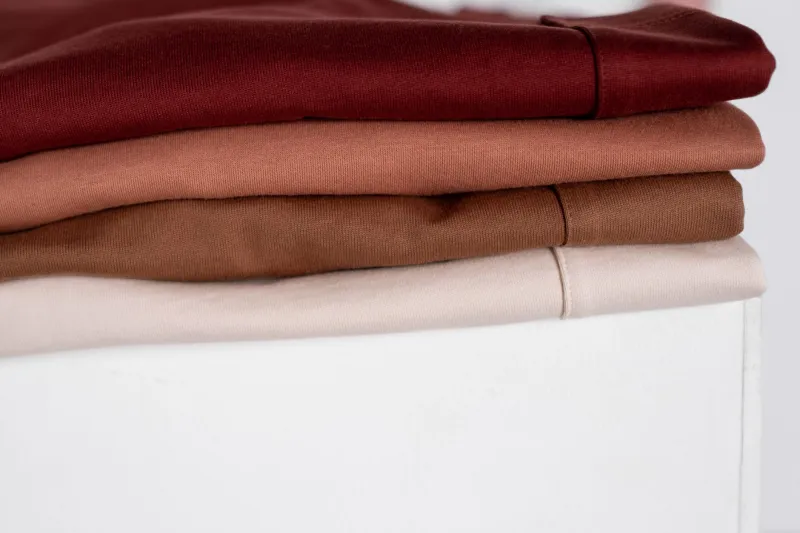
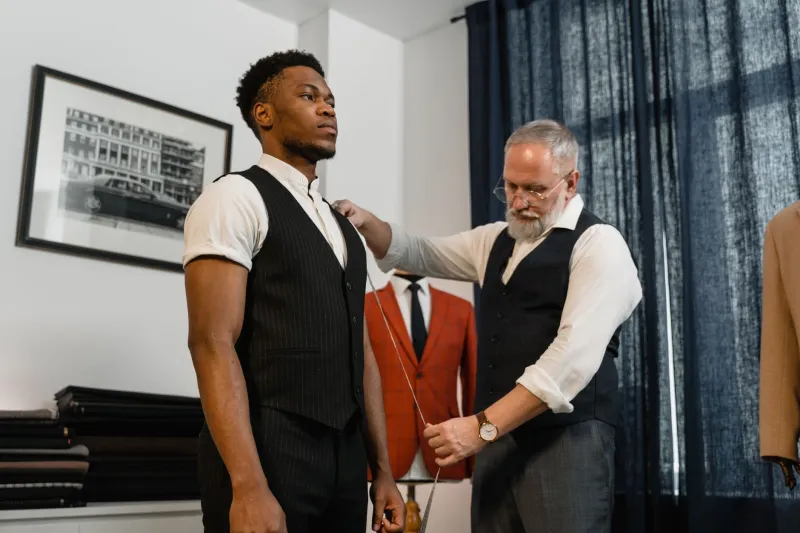
The Feel of It: How Fabric Texture Shapes the Way You Carry Yourself
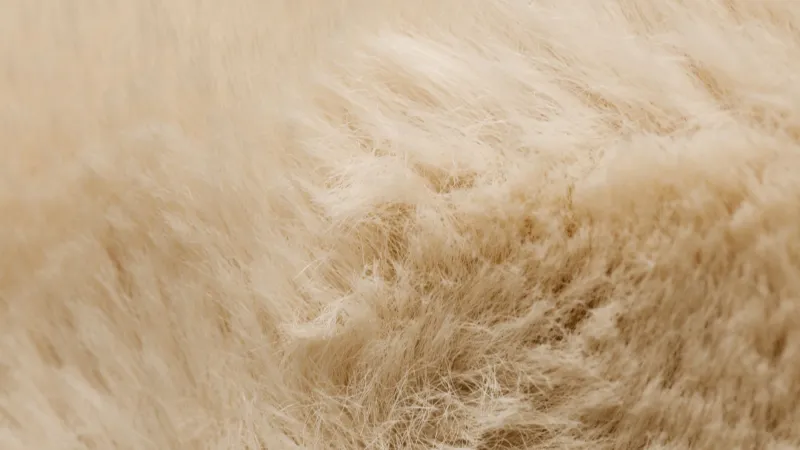
Fashion conversation tends to be overwhelmingly visual. We discuss silhouette, color, proportion, and pattern with considerable fluency. We have a language for what things look like. What we rarely discuss — and almost never with the same seriousness — is what things feel like. The weight of a fabric as it drapes across the shoulder. The way a particular weave moves when you walk. The sensation of a collar against the back of your neck at the end of a long afternoon.
This sensory dimension of dress is not a minor footnote. It is, for many people, the primary reason a garment either earns daily wear or quietly disappears to the back of the closet. And understanding it is one of the more underrated forms of style intelligence.
Why Texture Is a Form of Communication
Before a garment communicates anything visually, it is already communicating through texture. The matte weight of a double-faced cashmere coat, the crisp resistance of a high-thread-count cotton poplin, the fluid drape of a bias-cut silk — each of these sends a signal that is registered before conscious thought catches up. Texture conveys intention. It suggests care, or its absence. It implies a relationship between the wearer and the material world that is, in its own quiet way, deeply revealing.
Consider the difference between a wool blazer in a loosely woven bouclé and the same garment cut from a tightly constructed worsted. Both are technically wool. Both may be identically colored and proportioned. But the experience of wearing each — and the impression each creates — is entirely distinct. One is relaxed and tactile; the other is precise and authoritative. Neither is superior. But the choice between them is not neutral.
The Sensory Wardrobe: What Your Body Is Already Telling You
Most people have a sensory profile when it comes to clothing, even if they have never articulated it. Some individuals are acutely sensitive to texture — rough seams, scratchy wool, or stiff interlinings register as genuine discomfort and create a low-level distraction that accumulates across a day. Others are less sensitive but still respond, often without realizing it, to the way a fabric moves or resists movement.
If you have ever caught yourself pulling at a collar, rolling up sleeves that feel too structured, or simply feeling vaguely irritable in an otherwise perfectly acceptable outfit, texture may be the culprit. The garment is not wrong in any objective sense. But it is wrong for your particular sensory relationship with clothing — and that mismatch has consequences that extend well beyond comfort.
Research in the psychology of dress has consistently found that physical comfort in clothing influences posture, mood, and even cognitive performance. When what we wear feels right against the body, we move differently. We hold ourselves differently. The relationship between physical ease and projected confidence is not incidental.
Natural vs. Synthetic: A More Nuanced Conversation
The conventional wisdom in fashion circles is that natural fibers are categorically superior to synthetic ones. Like most absolute rules, this is an oversimplification that deserves interrogation.
Natural fibers — cotton, linen, wool, silk, cashmere — offer genuine advantages in breathability, longevity, and the particular way they age. A well-maintained linen shirt softens gracefully over years of wear. Cashmere, properly cared for, develops a patina that cannot be replicated. These materials tend to regulate temperature more effectively and often feel more comfortable against sensitive skin over long periods.
But the category of synthetics is not monolithic. A high-quality ponte knit or a technical-weave fabric engineered for specific performance characteristics may serve a particular garment's purpose far better than a natural alternative. The question is not purely philosophical — it is functional. What does this piece need to do? How will it be worn? What conditions will it face?
The most sophisticated approach is not allegiance to one category but literacy across both: understanding what different fiber compositions offer and selecting accordingly, rather than defaulting to either natural-fiber idealism or fast-fashion pragmatism.
Fabric Weight and the Architecture of Confidence
Beyond fiber content, weight is among the most consequential textural variables — and among the least discussed. Fabric weight determines how a garment falls, how it holds its shape through a day of wear, and how it responds to the body in motion.
A lightweight silk blouse that moves fluidly communicates ease and femininity. A heavy crepe in the same silhouette reads as structured and deliberate. Neither interpretation is more correct, but the wearer's experience of each is profoundly different. Heavier fabrics tend to create what might be called gravitational confidence — they fall with authority and resist distortion. Lighter fabrics offer freedom and fluidity but require more attention to underlying structure.
When a garment feels as though it is working with you — supporting your posture, moving in harmony with your body, maintaining its shape without constant adjustment — the result is a specific and recognizable quality of ease. This is not a minor aesthetic preference. It is the physical foundation of looking composed.
Building a Texture-Conscious Wardrobe
Developing genuine sensitivity to fabric and texture is a skill, and like most skills, it improves with deliberate attention. A few principles worth internalizing:
Touch before you buy, whenever possible. This seems obvious, yet the shift toward online shopping has trained many of us out of the habit. When shopping in person, handle the fabric before you consider the silhouette. How does it feel between your fingers? Does it have body, or does it collapse? Does it feel like it will hold its shape through a full day?
Wear new pieces for a full day before committing to them. Many garments that feel acceptable in a dressing room reveal their limitations by early afternoon. A collar that seemed fine at 10 a.m. may be genuinely uncomfortable by 3 p.m. A fabric that appeared substantial in store lighting may feel thin and clingy once you are moving through your actual day.
Identify your personal non-negotiables. For some wearers, anything that scratches at the neck is disqualifying. For others, fabrics that wrinkle easily create too much visual anxiety to be workable. Knowing your specific sensory sensitivities — rather than trying to override them — is far more productive.
Invest in the pieces you wear closest to your skin. Base layers, shirts, and undergarments that feel genuinely comfortable create a foundation upon which everything else can function. Skimping on fiber quality at this level undermines even the most thoughtfully assembled outer layer.
The Overlooked Luxury
There is a reason that true luxury in clothing has always been expressed, in large part, through fabric. Before the label, before the silhouette, before the color — there is the material itself, and the relationship it creates between garment and body.
Developing an informed relationship with texture is not an indulgence reserved for those with unlimited budgets. It is a form of self-knowledge with immediate, practical returns. When the clothes against your skin feel right — genuinely right, not merely acceptable — the act of wearing them becomes effortless. And effortlessness, in matters of style, is always the most sophisticated outcome.